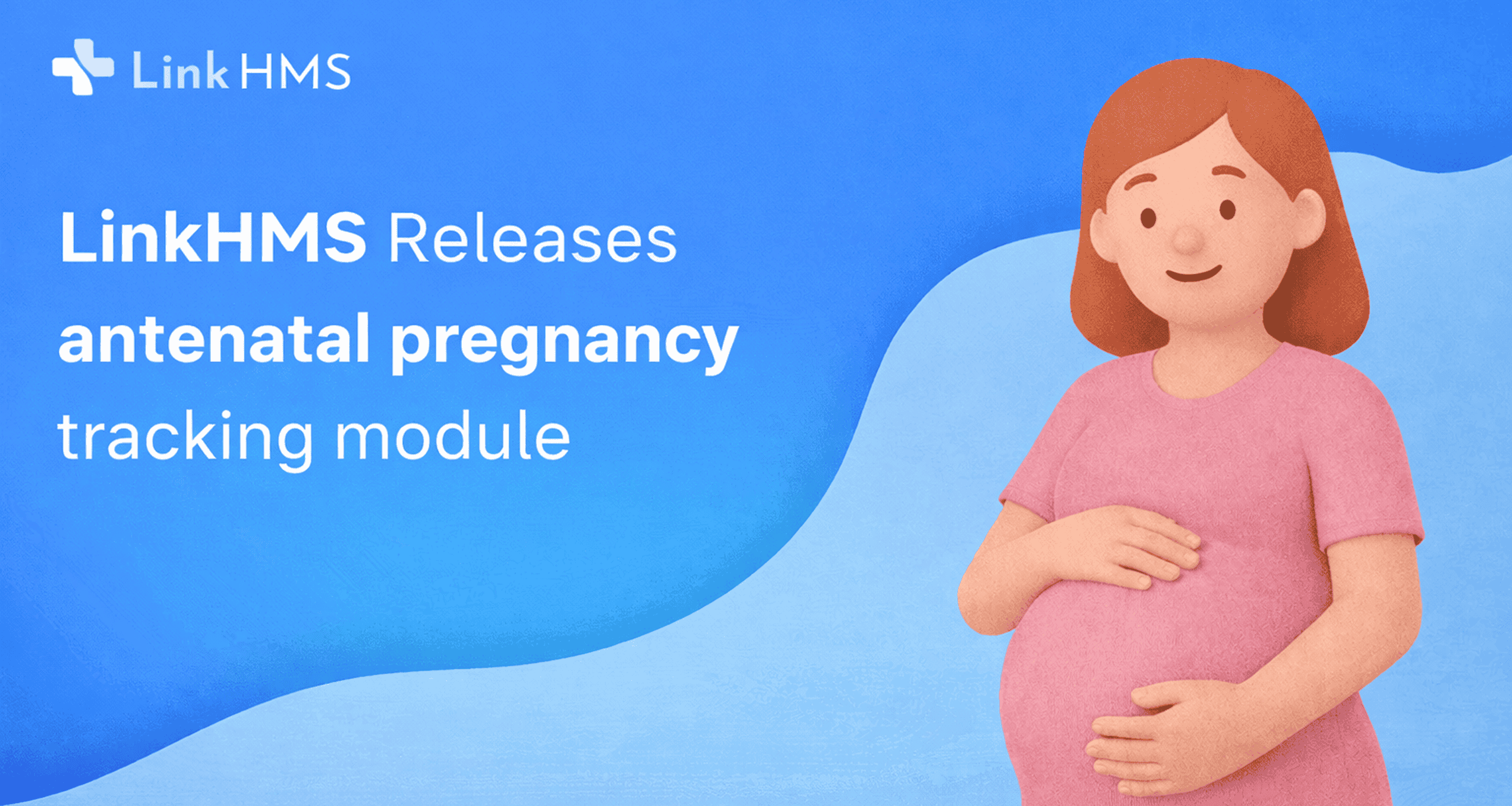
Pregnancy care is not a single visit. It is a continuous clinical timeline that includes routine checkups, ultrasounds, evolving risk assessments, and a definitive outcome. When that information is spread across unrelated encounters, it becomes harder to maintain continuity and easy to miss the clinical context that matters most.
The new pregnancy module in LinkHMS was built to preserve that timeline. It provides a structured way to start a pregnancy record, automatically track gestational progress, document care in real time, and maintain a complete pregnancy history for future clinical decisions.
Designed for continuity from the first entry to the outcome
The module supports a simple goal: help the care team quickly view the current pregnancy status, update records without extra steps, and keep related information together throughout the pregnancy. It offers your healthcare team a more transparent, connected workflow for prenatal care.
That means clinicians can:
- Create a pregnancy record in minutes
- See gestational age updated automatically at each visit
- Document antenatal assessments and ultrasound findings in a consistent format
- Attach ultrasound images and reports where they belong
- Finalize the pregnancy with a clear outcome and a locked record
- Review past pregnancies easily when planning care
Step 1 – Start the pregnancy record with a single clinical anchor
The workflow begins in the patient chart under the Pregnancy tab. When a patient has no recorded pregnancies, the tab remains intentionally minimal to make it clear where to start.
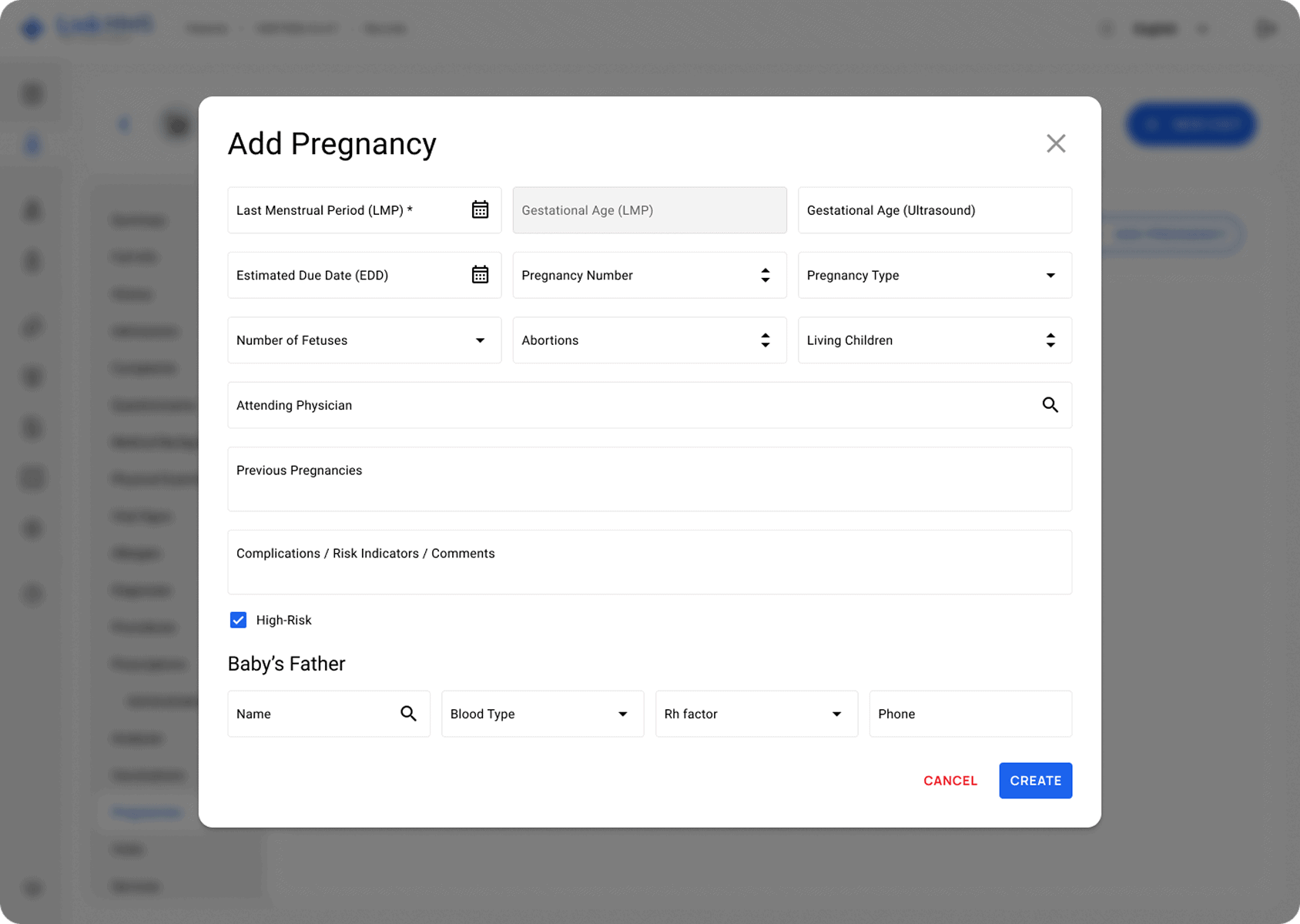
Pregnancy begins with one required detail: the Last Menstrual Period (LMP). Once LMP is entered, LinkHMS immediately calculates gestational age and estimated due date. This is the point where the record stops being a static form and becomes an active clinical timeline.
To make that status visible across the chart, a pregnancy indicator appears next to the patient’s name, showing the current gestational age at a glance.
Step 2 – Keep gestational context current at every visit
With the pregnancy record created, the next challenge is ensuring the information remains accurate over time. Gestational age changes continuously, and recalculating it manually at each visit is both repetitive and error-prone.
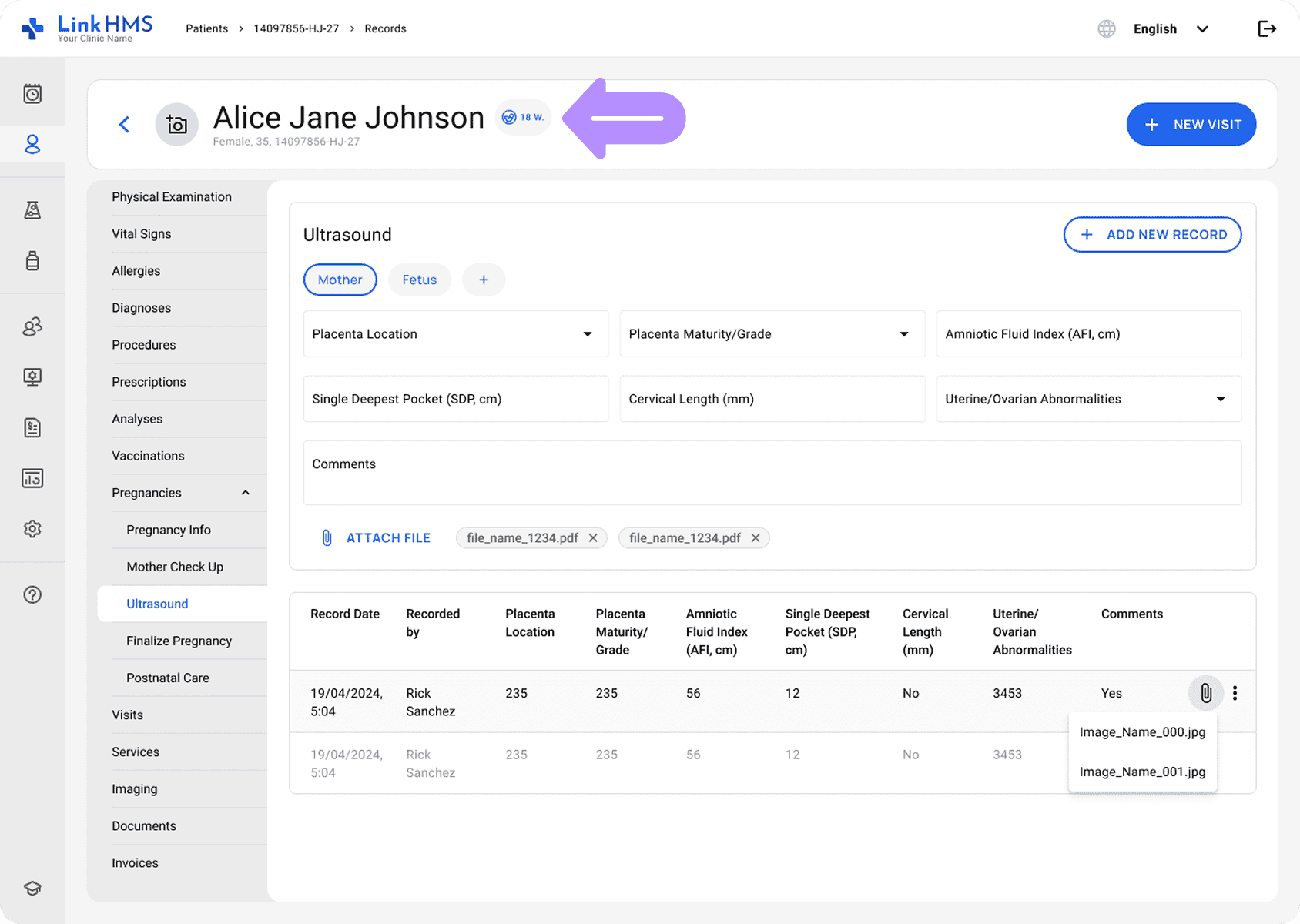
LinkHMS addresses this by updating gestational age automatically based on the visit date. Each time the patient returns, the chart reflects the right gestational stage without any additional work from the care team.
If the pregnancy exceeds the estimated due date, the indicator changes to indicate that the pregnancy is overdue. This keeps the timeline clinically meaningful rather than merely informational.
Step 3 – Capture care in a format that matches how pregnancy is managed
Once the gestational context is in place, the workflow naturally shifts to documentation. The module provides focused sections that mirror how pregnancy care is delivered, so clinicians can document what matters without scattering details across unrelated notes.
Pregnancy Info – the pregnancy profile
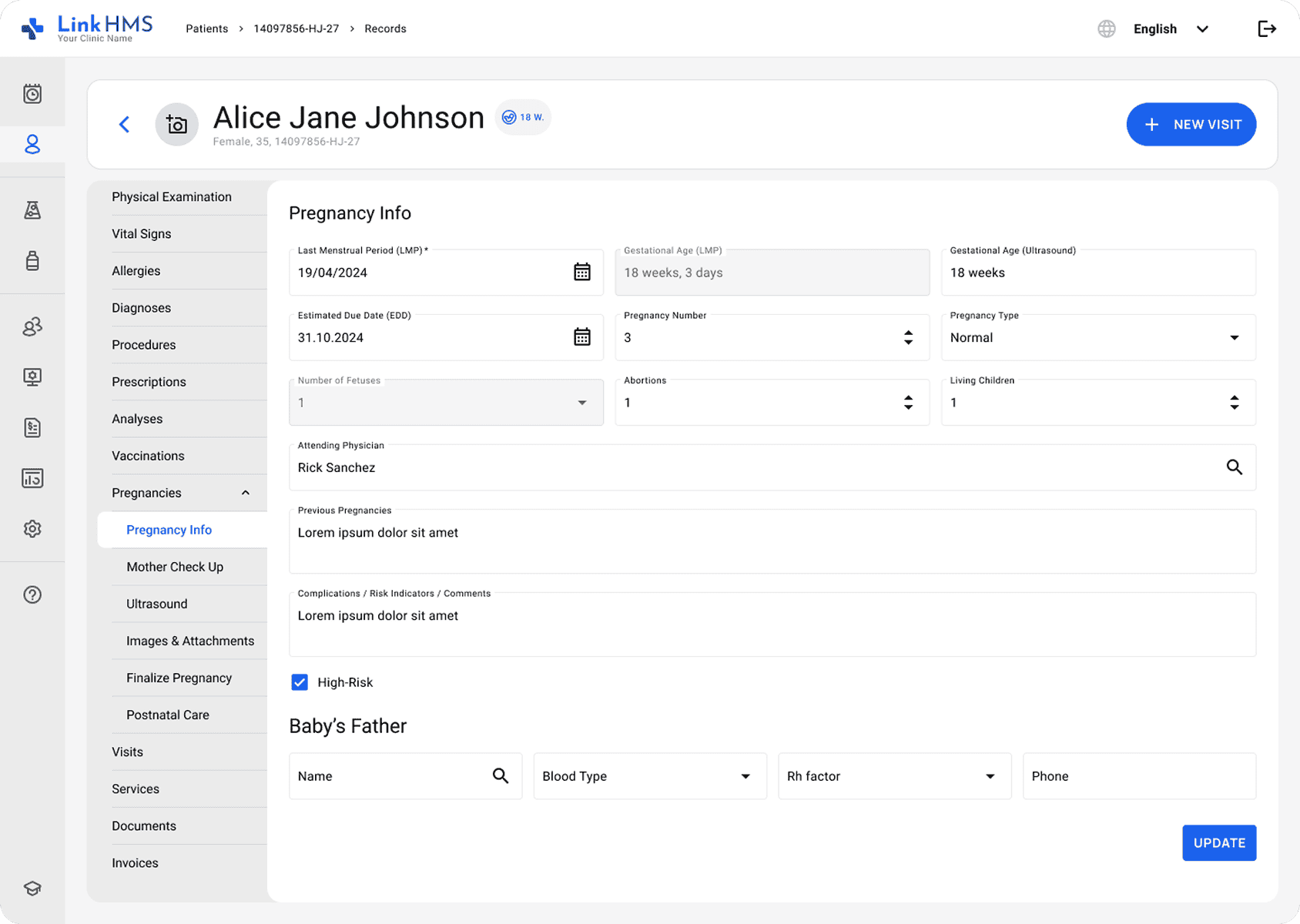
Pregnancy Info stores key pregnancy details in one place and supports updates over time, so the record reflects changes in clinical assessment, risk, or responsibility. It is designed to remain usable throughout the pregnancy as information becomes available.
From there, most patients move into routine monitoring, which is where the next section becomes essential.
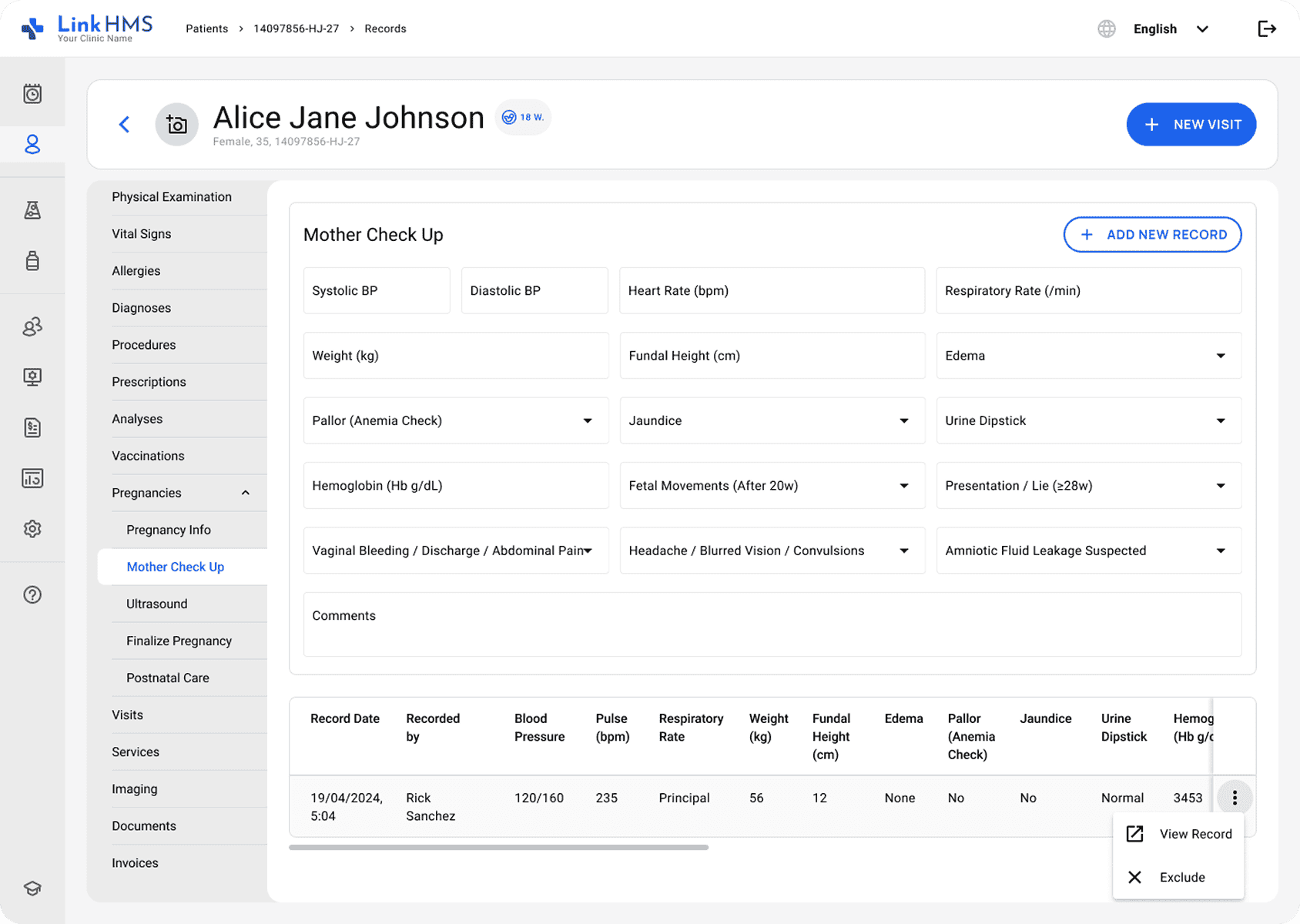
Mother Check-Up – a structured checkup timeline
Mother Check-Up is built for repeated antenatal assessments. Instead of recording those values and observations across multiple visits, LinkHMS turns them into a clear timeline of recorded entries. This makes it easier to review progression and identify trends when clinical decisions depend on what changed and when.
As pregnancy care progresses, ultrasound becomes a key part of confirming fetal development and guiding management, and the module transitions naturally into that documentation.
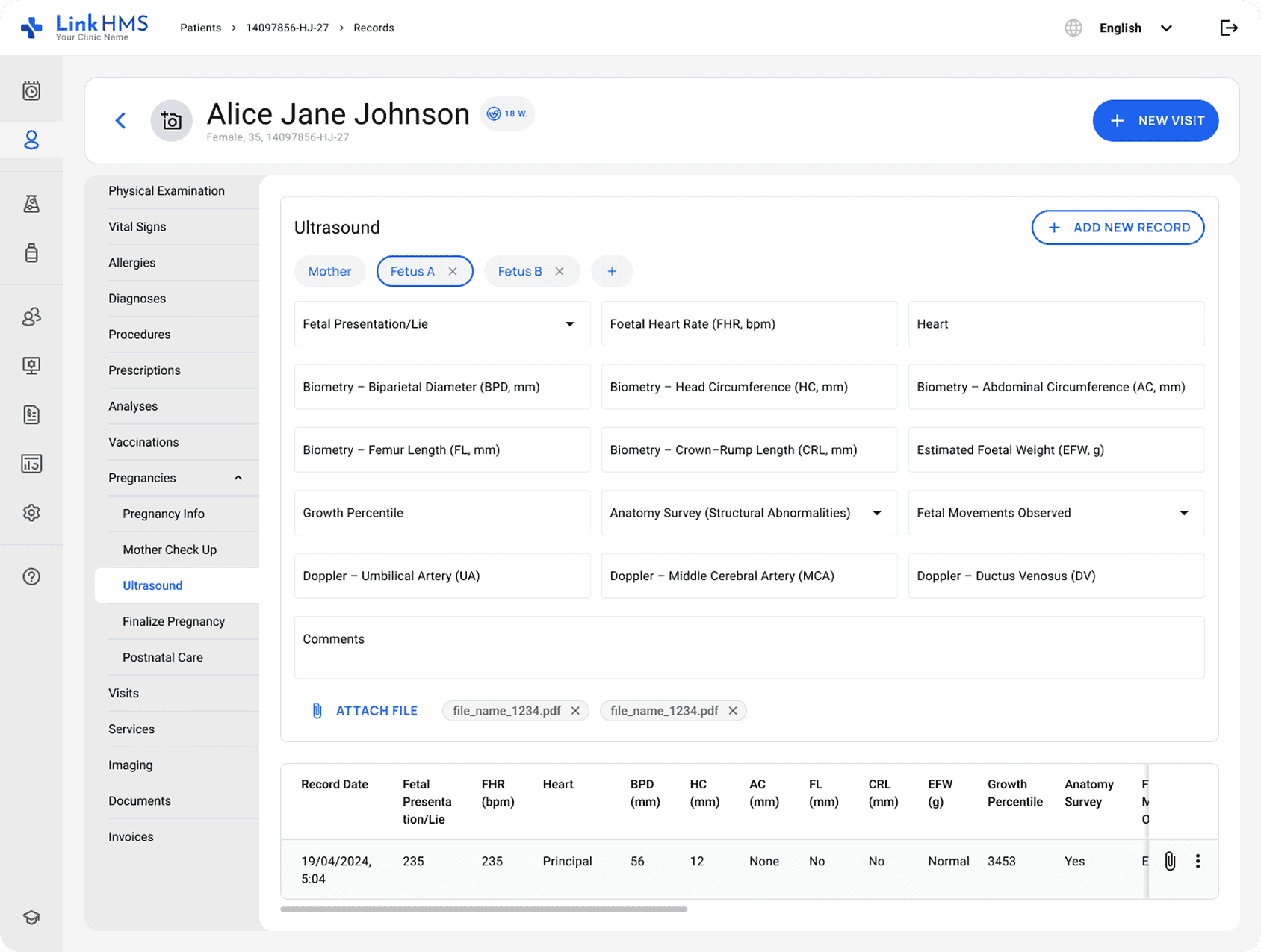
Ultrasound – findings, multi-fetus tracking, and attachments
Ultrasound documentation often includes both structured findings and supporting files. LinkHMS supports recording ultrasound data for the mother and for each fetus when pregnancies involve more than one fetus, while keeping the record organized and consistent.
Because ultrasound is frequently accompanied by images and reports, clinicians can attach supporting files directly within the pregnancy record. These attachments remain accessible later and are also available through Imaging for easier review.
Step 4 – Finalize the pregnancy and preserve a reliable clinical record
Every pregnancy record needs a clear endpoint. Without it, records remain open-ended and less useful as historical references.
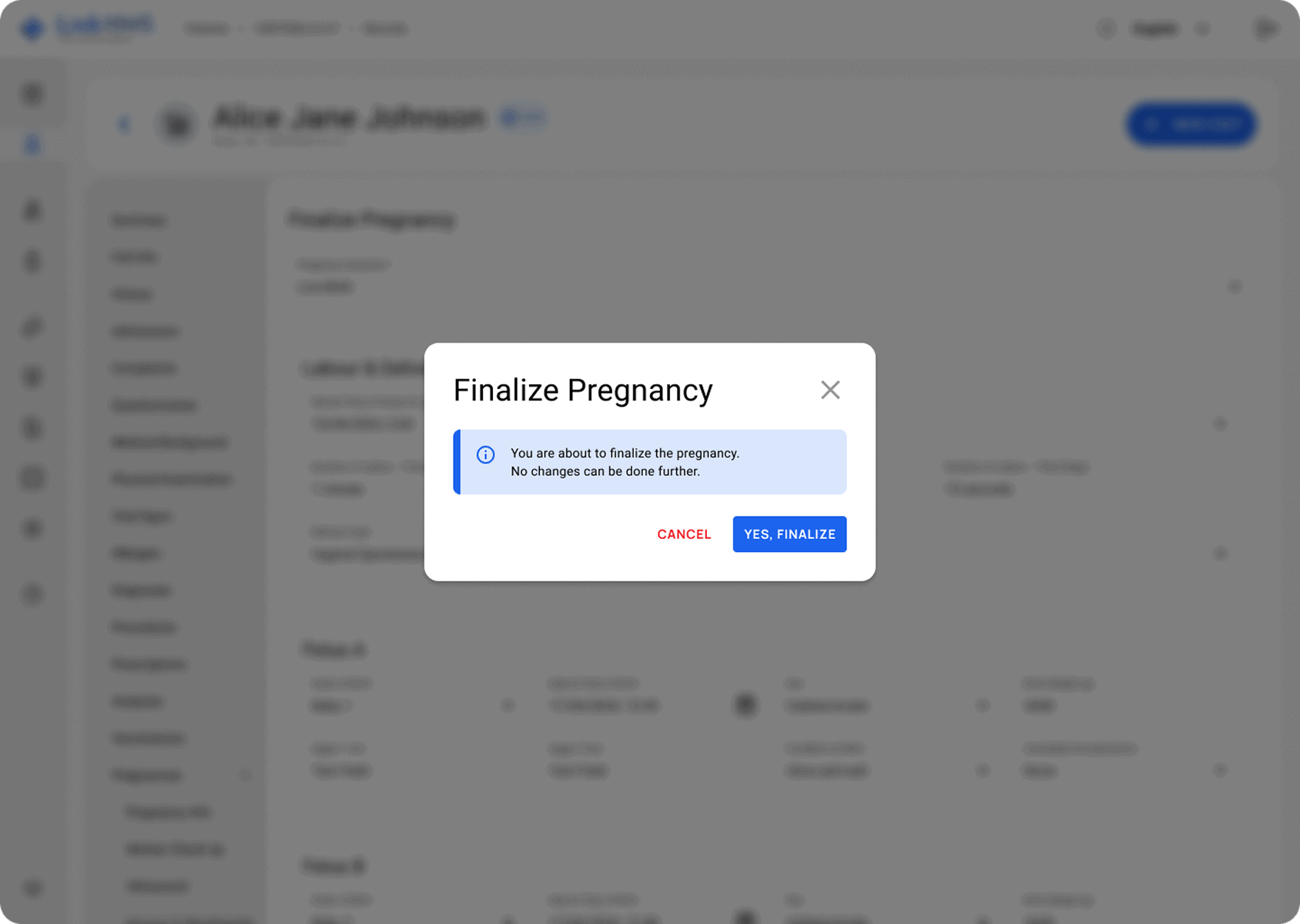
The module includes a Finalize Pregnancy tab that records the outcome and completes the pregnancy timeline. Finalization is intentionally explicit and confirmed, because it marks the point where the record becomes part of the patient’s long-term history.
Once finalized, the pregnancy record becomes locked. This protects clinical accuracy and ensures that the historical record remains stable and reliable.
Step 5 – Pregnancy history becomes the reference point for future care
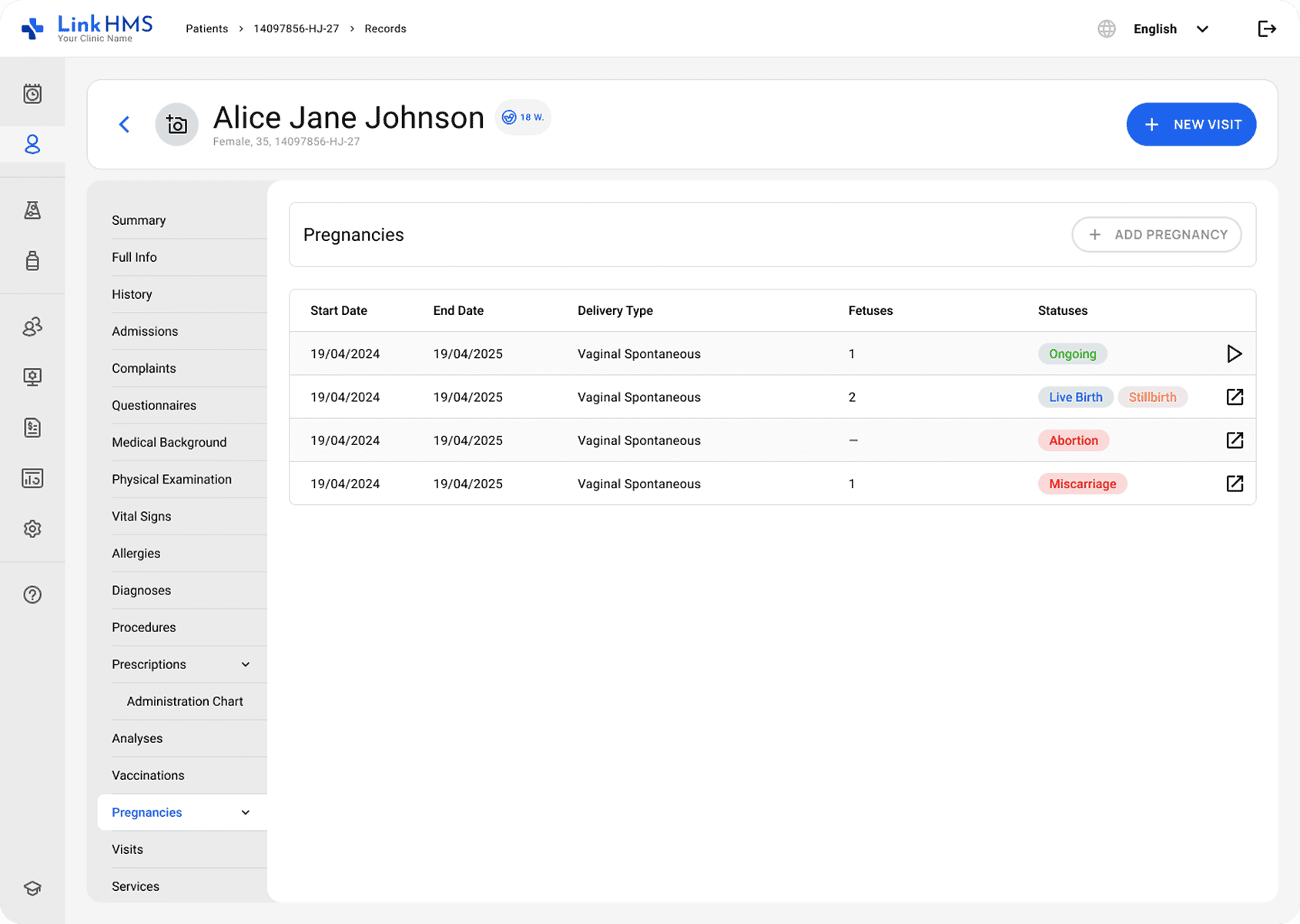
The final outcome is not the end of the module’s value. In many cases, its most important contribution appears later, when a clinician needs to understand prior pregnancies quickly and confidently. Pregnancy history provides an overview of recorded pregnancies with key dates and outcomes, allowing clinicians to reference obstetric history without searching through unrelated encounters.
What the antenatal care module enables
This LinkHMS module supports a complete pregnancy workflow:
- Start a pregnancy record from LMP
- Automatically track gestational age across visits
- Maintain key pregnancy details in a single profile
- Document antenatal checkups as a readable timeline
- Record ultrasound findings with support for multiple fetuses
- Attach ultrasound images and reports within the pregnancy record
- Finalize outcomes and lock the record for long-term reliability
- Review pregnancy history quickly when planning care
A practical improvement in day-to-day prenatal workflow
This release is focused on making prenatal care documentation easier to follow and harder to fragment. By connecting the early pregnancy anchor, ongoing gestational tracking, structured documentation, and final outcomes into one workflow, the pregnancy module helps clinical teams maintain continuity across the full pregnancy timeline and make decisions with stronger context.